The spring force – also known as the tension force – arises when an elastic body is pulled apart or compressed – for example one Metal spring made of spring steel wire . An opposing force acts in it, which
Calculate spring force

News und Informationen rundem Metallfedern
The spring force – also known as the tension force – arises when an elastic body is pulled apart or compressed – for example one Metal spring made of spring steel wire . An opposing force acts in it, which
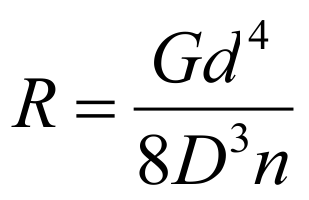
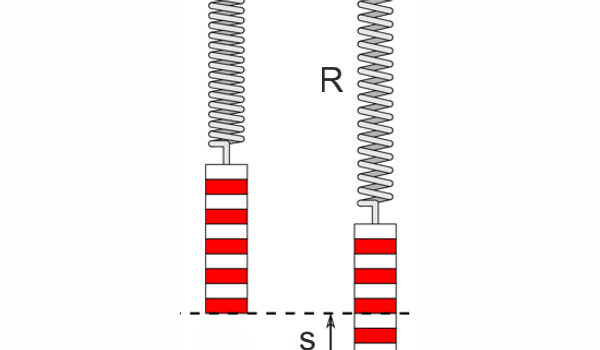
The spring rate, also called spring constant or spring hardness, depends on the spring material and the shape of the compression spring, extension spring or torsion spring. The formula for calculating the spring rate for cylindrical springs made of round
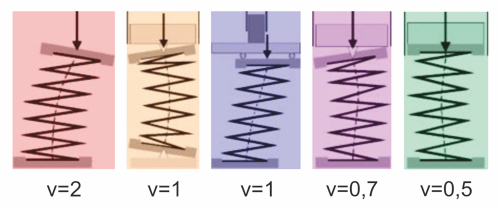
Depending on the size, guidance and bearing, compression springs are at risk of buckling. When guided by mandrel or sleeve, the spring cannot buckle. In other cases, it depends on the design of the bearing(EN 13906-1 / 9.14). The spring
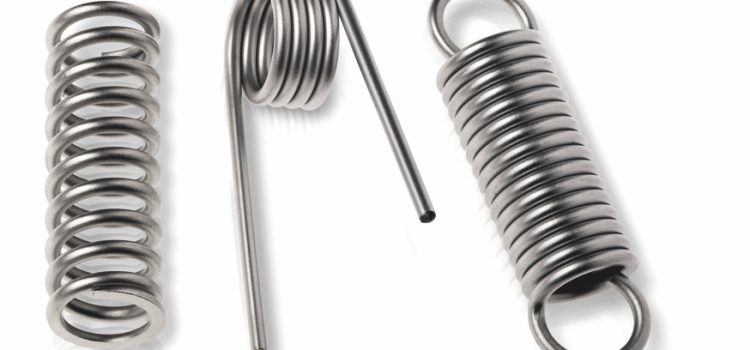
Below is the summary of the basics about Spring design of Compression springs , Tension springs and Leg springs . Technical springs are still one of the most important machine elements today and are used successfully in vehicles, precision mechanical
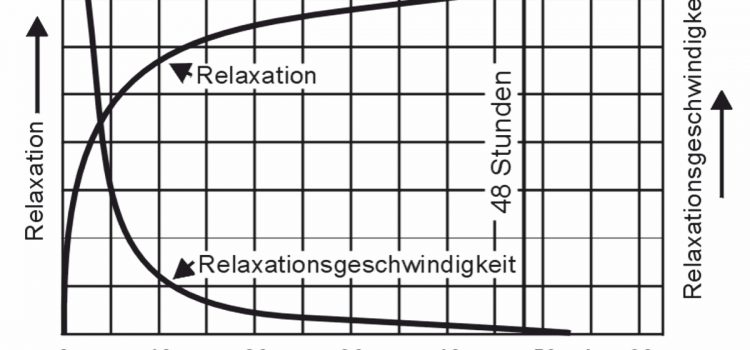
In metal springs, a loss of force occurs under permanent tension and higher temperatures, which is called relaxation. This loss of force increases with increasing temperature and load duration. This loss of force is given as a percentage of the
Compression springs, extension springs and torsion springs are typical C-parts for most companies: They are not the focus of the procurement process, but are used in almost all technical applications. The requirements for the springs are very versatile and individual.
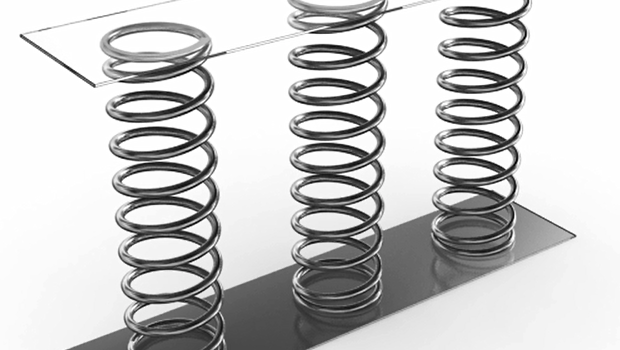
To absorb forces and movements are sometimes also Spring systems used. Due to the different arrangement of Compression springs A wide variety of force properties can be generated. Simple spring systems are: Compression springs parallel connection The springs are arranged
Exceeds when the spring is loaded Shear stress the permissible value, a permanent deformation occurs, which manifests itself in the reduction of the unstressed length “L0”. This process is called “setting” in spring technology, which is associated with the properties
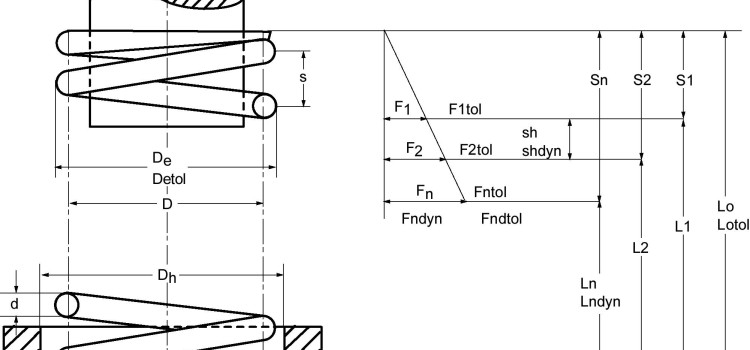
Every spring design of a compression spring consists of two stages : 1. The proof of function, with the verification of the dimensions, spring rate, forces, spring travel and vibration behavior. 2. The proof of strength, with the verification of
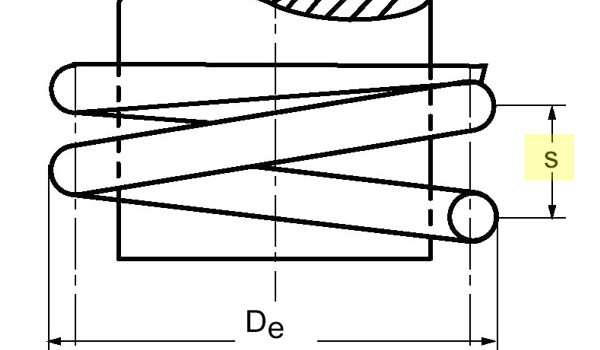
The pitch “S” of compression springs, also known as the coil pitch, refers to the distance between their individual coils (wire center to wire center) and is calculated and determined using the following formulas. It is measured parallel to the